Explore · Revolutionary Era

History in Color

The engravings, illustrations, and paintings that recorded the American Revolution as it happened — brought to life in color. Ten pivotal moments, from the Stamp Act crisis of 1765 to the surrender at Saratoga in 1777.

The Stamp Act Crisis, 1765
🖼
Stamp-act.jpg
1765
Stamp Act Crisis
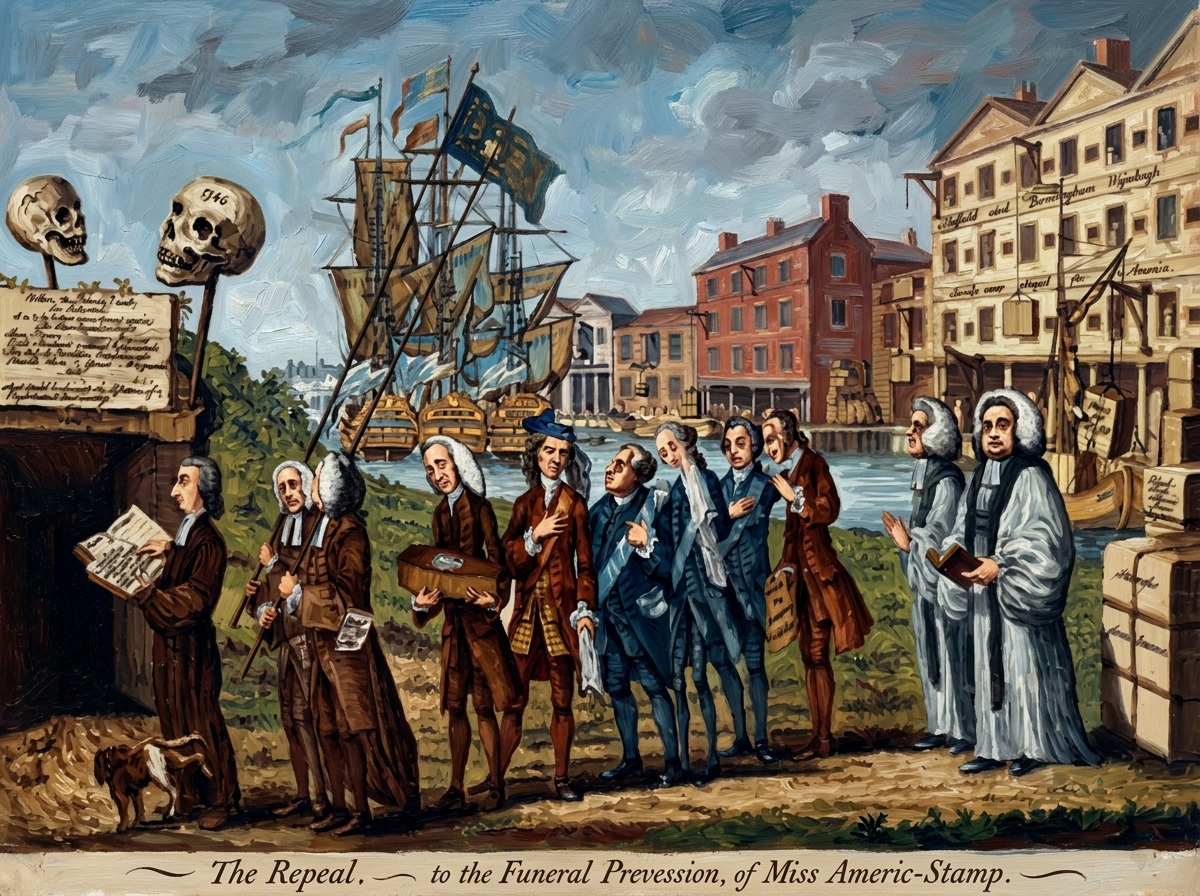
The Repeal, or the Funeral Procession of Miss Americ-Stamp
When Parliament repealed the hated Stamp Act in 1766, colonists celebrated — but the episode exposed an irreparable rift. The act had imposed Britain's first direct tax on the colonies, sparking riots, boycotts, and the rallying cry of "no taxation without representation."
Library of Congress
View Original Engraving →
The Boston Massacre, 1770
🖼
boston-massacre.jpg
1770
Boston Massacre
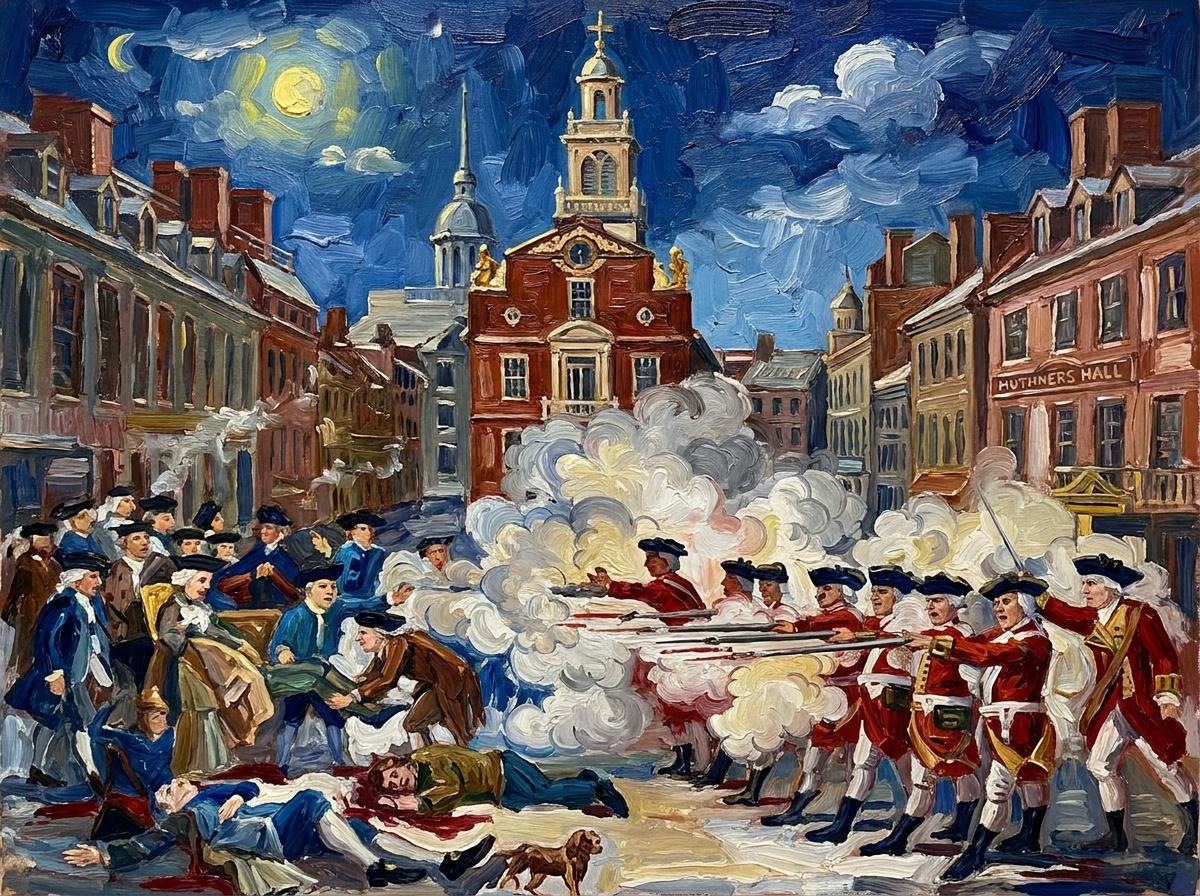
The Bloody Massacre Perpetrated in King Street
Paul Revere's famous engraving — itself copied from Henry Pelham — became colonial America's most powerful piece of protest art. It depicted the March 5, 1770 killing of five colonists by British troops as cold-blooded murder, inflaming public opinion across the thirteen colonies.
Paul Revere, 1770 · Library of Congress
View Original Engraving →
The Boston Tea Party, 1773
🖼
boston-tea-party.jpg
1773
Boston Tea Party
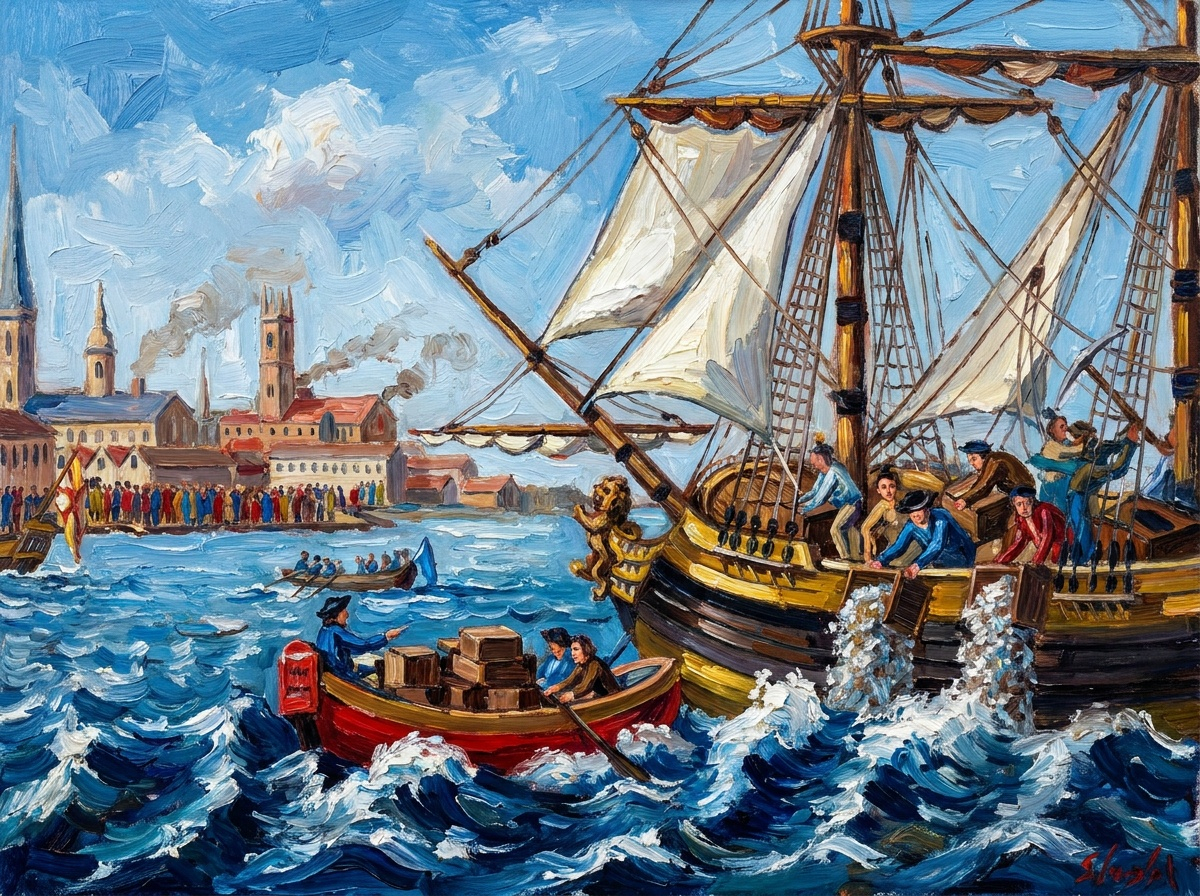
Americans Throwing the Cargoes of the Tea Ships into the River
On the night of December 16, 1773, members of the Sons of Liberty disguised as Mohawk Indians boarded three ships in Boston Harbor and dumped 342 chests of British East India Company tea into the water — a direct act of political defiance that made confrontation with Britain inevitable.
W. D. Cooper engraving · UK National Archives
View Original Engraving →
The Coercive Acts, 1774
🖼
coercive-acts.jpg
1774
Intolerable / Coercive Acts
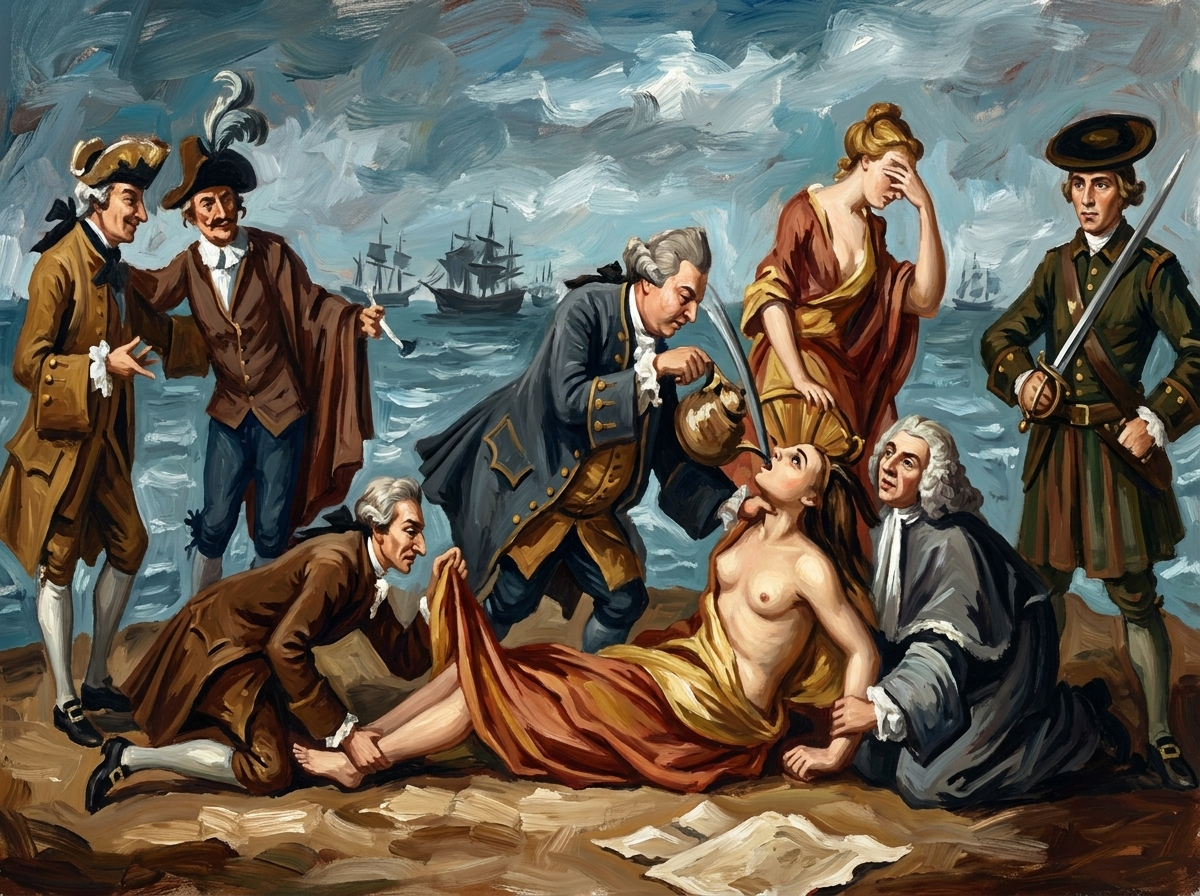
The Able Doctor, or America Swallowing the Bitter Draught
Britain's punitive response to the Tea Party — closing Boston's port, dissolving Massachusetts self-government — united the colonies in outrage. This satirical engraving depicts America being force-fed British tea while Britannia looks away, capturing the colonial sense of violation and helplessness.
London Magazine, 1774 · Library of Congress
View Original Engraving →
The First Continental Congress, 1774
🖼
first-continental-congress.jpg
1774
First Continental Congress
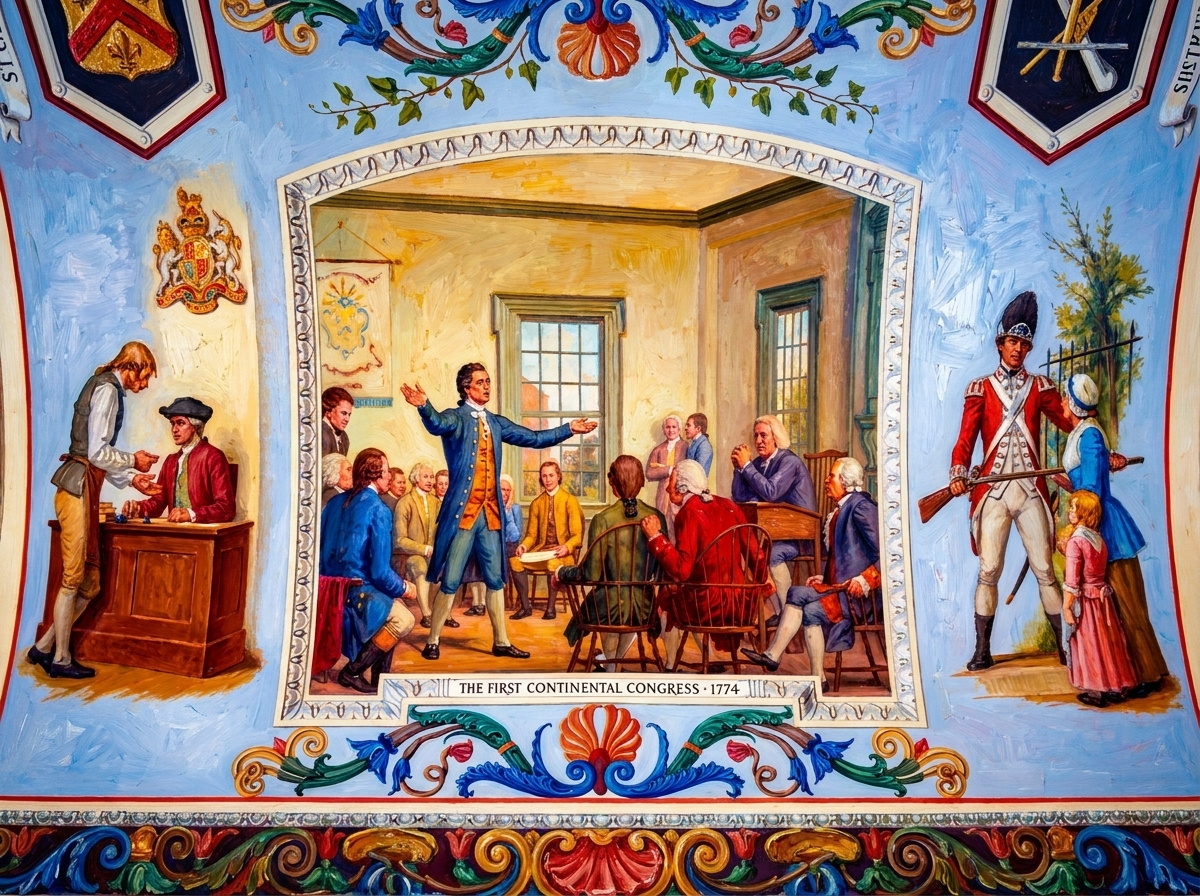
The First Continental Congress, 1774
Fifty-six delegates from twelve colonies convened in Philadelphia's Carpenters' Hall in September 1774 — the first formal gathering of colonial representatives to act in concert. They drafted a Declaration of Rights, agreed to boycott British goods, and set the stage for revolution.
Architect of the Capitol
View Original →
Battle of Lexington, 1775
🖼
battle-of-lexington.jpg
1775
Lexington and Concord
The Battle of Lexington, April 19, 1775
This engraving — drawn from eyewitness accounts shortly after the event — is among the earliest visual records of the Revolutionary War. The "shot heard round the world" on Lexington Green on April 19, 1775 marked the first armed clash of the American Revolution, as colonial militiamen faced British regulars on the village common.
Artist unknown, 1775 · Wikimedia Commons
View Original Engraving →
Battle of Bunker Hill, 1775
🖼
battle-of-bunker-hill.jpg
1775
Battle of Bunker Hill
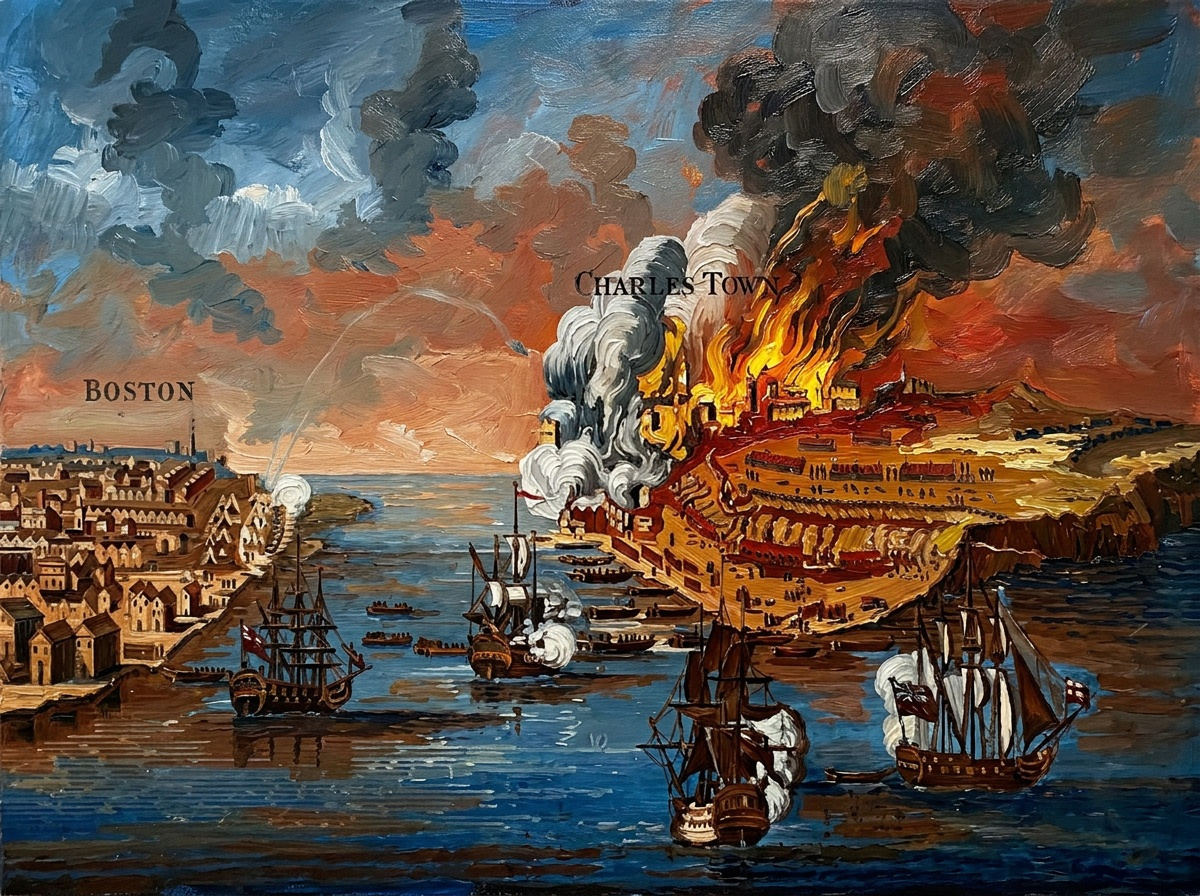
View of the Attack on Bunker's Hill with the Burning of Charles Town
Though the colonial militia ultimately retreated, the June 17, 1775 Battle of Bunker Hill — fought mostly on Breed's Hill — demonstrated that American forces could withstand repeated assaults by disciplined British regulars. The British suffered over 1,000 casualties, a sobering preview of the war ahead.
Library of Congress
View Original Engraving →
Siege of Yorktown, 1781
🖼
Washington-at-2.jpg
1781
Siege of Yorktown
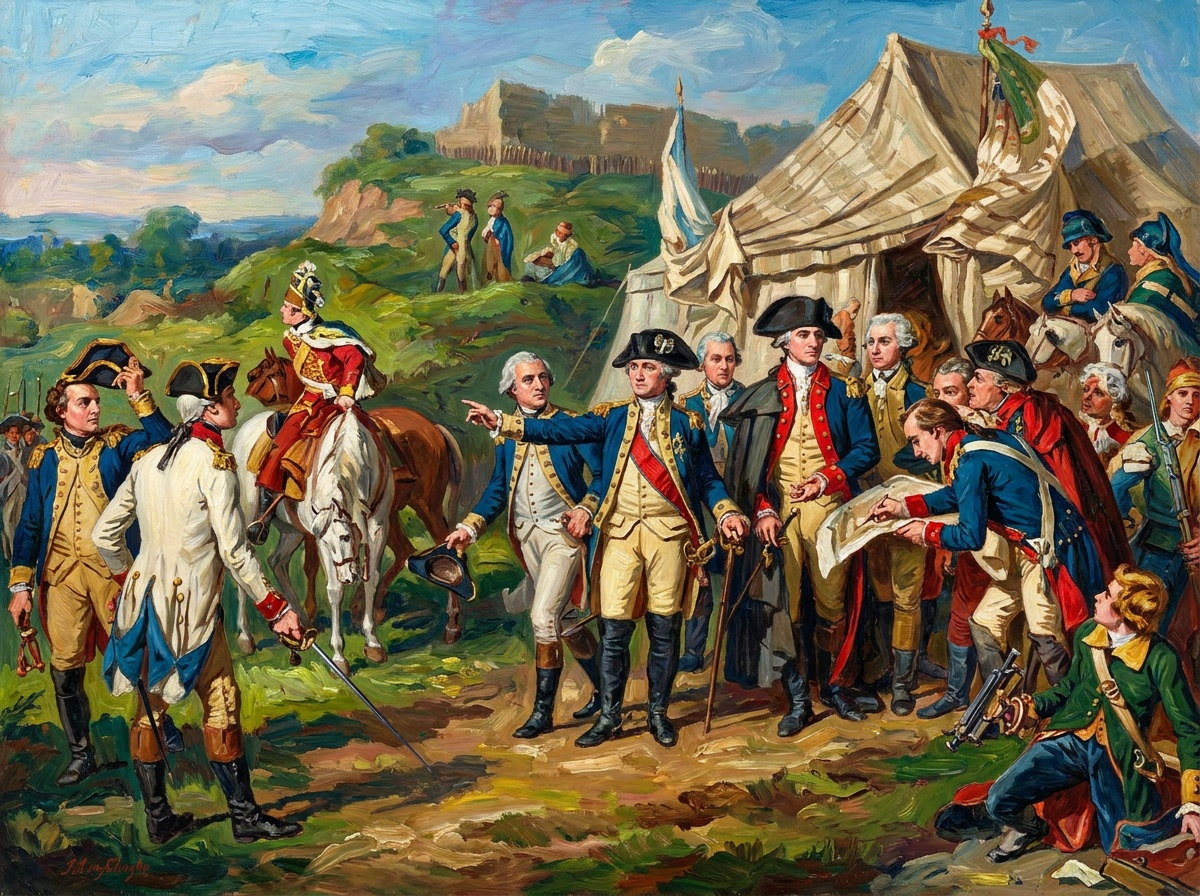
Siege of Yorktown, 1781
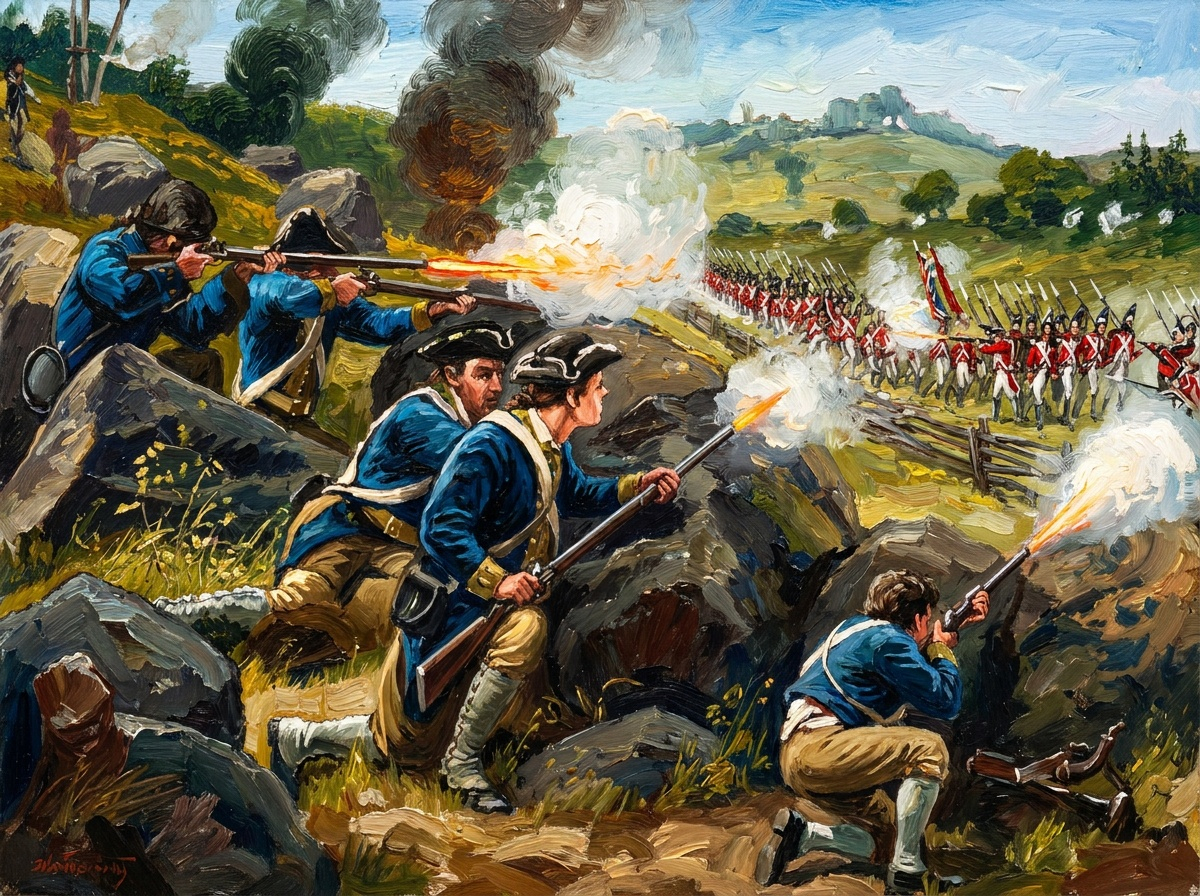
The Siege of Yorktown in October 1781 was the final major land battle of the Revolutionary War. Washington's combined American and French forces surrounded and bombarded Cornwallis's British army for three weeks until his surrender on October 19 — effectively ending the war and securing American independence.
World History Encyclopedia
View Original →
Declaration of Independence, 1776
🖼
declaration-of-independence-trumbull.jpg
1776
Declaration of Independence
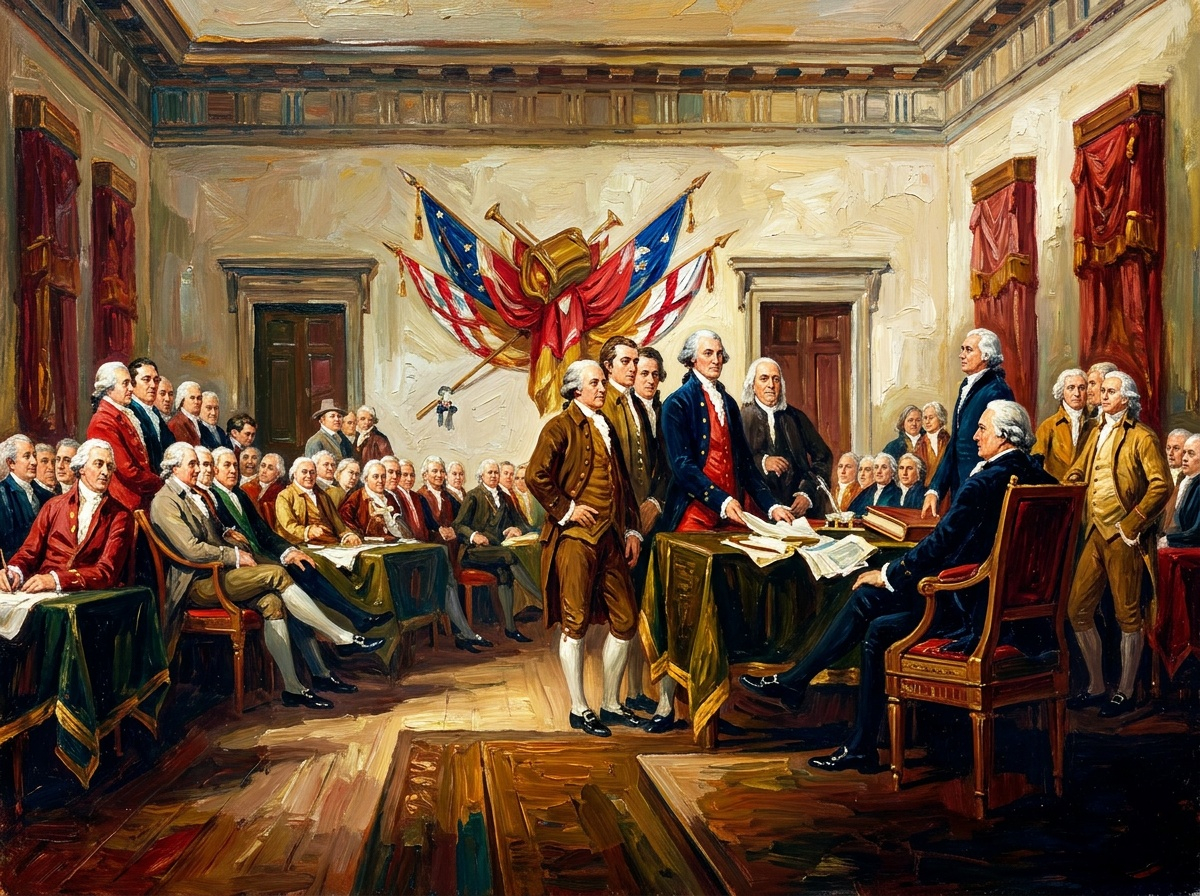
Declaration of Independence — after Trumbull
John Trumbull's monumental painting — depicting the presentation of the draft Declaration to Congress on June 28, 1776 — was engraved by Illman Brothers in 1876 for the nation's Centennial. Trumbull personally interviewed survivors and incorporated 36 actual portraits of the men present.
Trumbull / Illman Brothers, 1876 · Library of Congress
View Original →
Surrender at Saratoga, 1777
🖼
surrender.jpg
1777
Battle of Saratoga
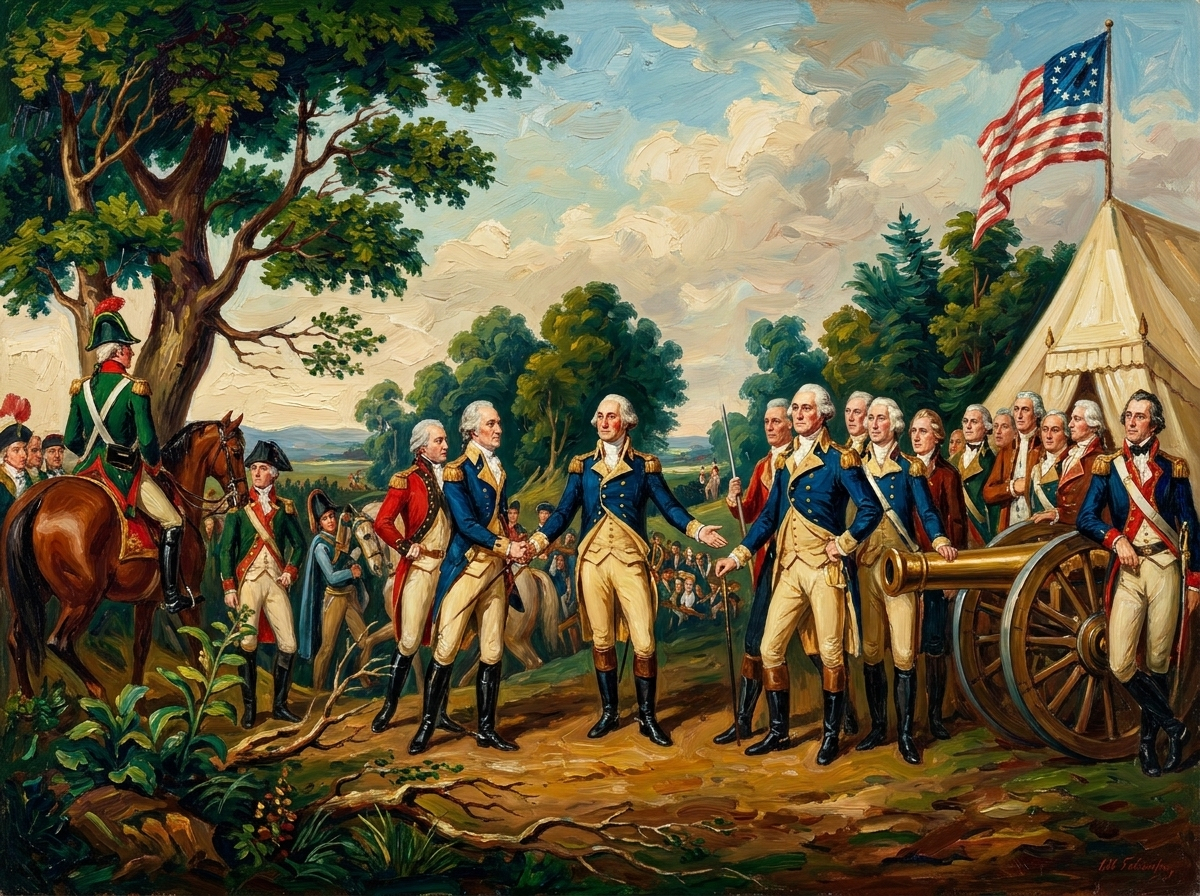
Surrender of General Burgoyne at Saratoga
The October 17, 1777 surrender of General John Burgoyne's British army at Saratoga, New York was the turning point of the Revolutionary War. The American victory persuaded France to enter the war as an ally — a decisive shift that ultimately made independence possible. Trumbull's painting captures the moment of capitulation.
Library of Congress
View Original Engraving →
Also in this collection: Washington at Cambridge — The engraving George Washington at Cambridge depicts Washington taking command of the Continental Army on July 3, 1775, beneath the Cambridge Elm in Massachusetts. It represents the moment America gained its military leader and the Revolution gained its moral center. View at Library of Congress →